5
Stage 5
Train to Train
Best suited for
Males
12-16
Years
Females
11-15
Years
Riding age
6+
Years
About the Train to Train Stage
This stage is pivotal for skaters with high-performance potential, as it's a critical period for developing speed, strength, and stamina. The beginning of the growth spurt, typically occurring between ages 12-16 for males and 11-15 for females, marks the start of this stage and carries significant implications for training programs. Adolescence brings about a major growth spurt, which happens about two years earlier in girls compared to boys. Additionally, there's considerable variation in when this growth spurt begins among children of the same sex. Some girls may start their adolescent growth as early as 8 or 9 years, while some boys may not begin until they are 14 or older.
This variation is crucial for several reasons:
- Early maturing boys may have an initial competitive edge in this stage due to their greater height, weight, and strength compared to later-maturing peers. However, as peers catch up, these early developers may face challenges if they had relied too much on their physical advantages and neglected skill development.
- Late maturing girls can have an advantage early in this stage as their slimmer build may facilitate quicker movements.
- It's essential to support both early maturing females and late maturing males throughout this stage to promote overall sports health and retain top talent in sports like skateboarding.
Adolescence is also a time of enhanced responsiveness to physical training, including:
- For both male and female skaters:
- Whole body speed, including stopping, starting, and changing direction.
- Stamina development.
- For female skaters:
- Strength training, especially post-Peak Height Velocity (PHV).
- Sensitivity to team dynamics is heightened, and it's crucial for coaches to foster an inclusive team environment.
- Coaches should focus on promoting healthy eating habits instead of emphasizing body weight to prevent eating disorders.
Skateboarding Season Structure
Competition/Training Ratio
40%
Competition
60%
Training
Pre-Season
2x/week + off-board
Training in the early stage
3x/week + off-board
Training in the late stage
Competitive Season
12-15
Weeks
3-4
Competitions in early stage
4-5
Competitions in late stage
Weekly Structured Skateboarding Activities
2-3
Session in early stage (90 minutes each)
3-4
Sessions in late stage (90 minutes each)
Year-Round Activity
1-2
Participation in 1-2 complimentary sports as part of year round activity to continue to develop all-around athletic competency.
Considerations for this stage of development in Skateboarding
In this stage of development, based on factors such as interest, available time, and commitment levels, skateboarders often decide whether they want to pursue skateboarding recreationally or competitively. Those who are interested in focusing on skateboarding should consider making it one of their top 2-3 activities, ideally complementing it with other favorite sports in alternating seasons (e.g., skateboarding in spring and summer, and other sports like snowboarding in late fall and winter).
Competitions should continue to emphasize skill development over wins and losses. skaters in the later part of the Train to Train stage might start moving towards a more focused path in skateboarding, aiming for excellence and potentially high-level achievements.
The majority of skateboarders beyond the age of 11 or 12 fall into the Skate for Life stage. This group is diverse in terms of skill, body types, and abilities. Their previous experience with skateboarding can vary widely.
The Skate for Life stage can be categorized into:
- Competitive for Life: This category is for those who enjoy competition but may not possess the skills, desire, or commitment for a high-performance trajectory. It includes skaters who have experienced skateboarding at a high level and now wish to continue at a less intense pace. Competitive for Life also accommodates those who primarily enjoy the competitive aspect of skateboarding at any level.
- Fit for Life: This group comprises individuals who skateboard for enjoyment, personal satisfaction, or health benefits. While competition may still be a part of their experience, the primary focus is on the health and social advantages of skateboarding. Many in the Fit for Life category may be new to skateboarding, making introductory sessions and a welcoming skateboarding community essential for attracting and retaining these participants.
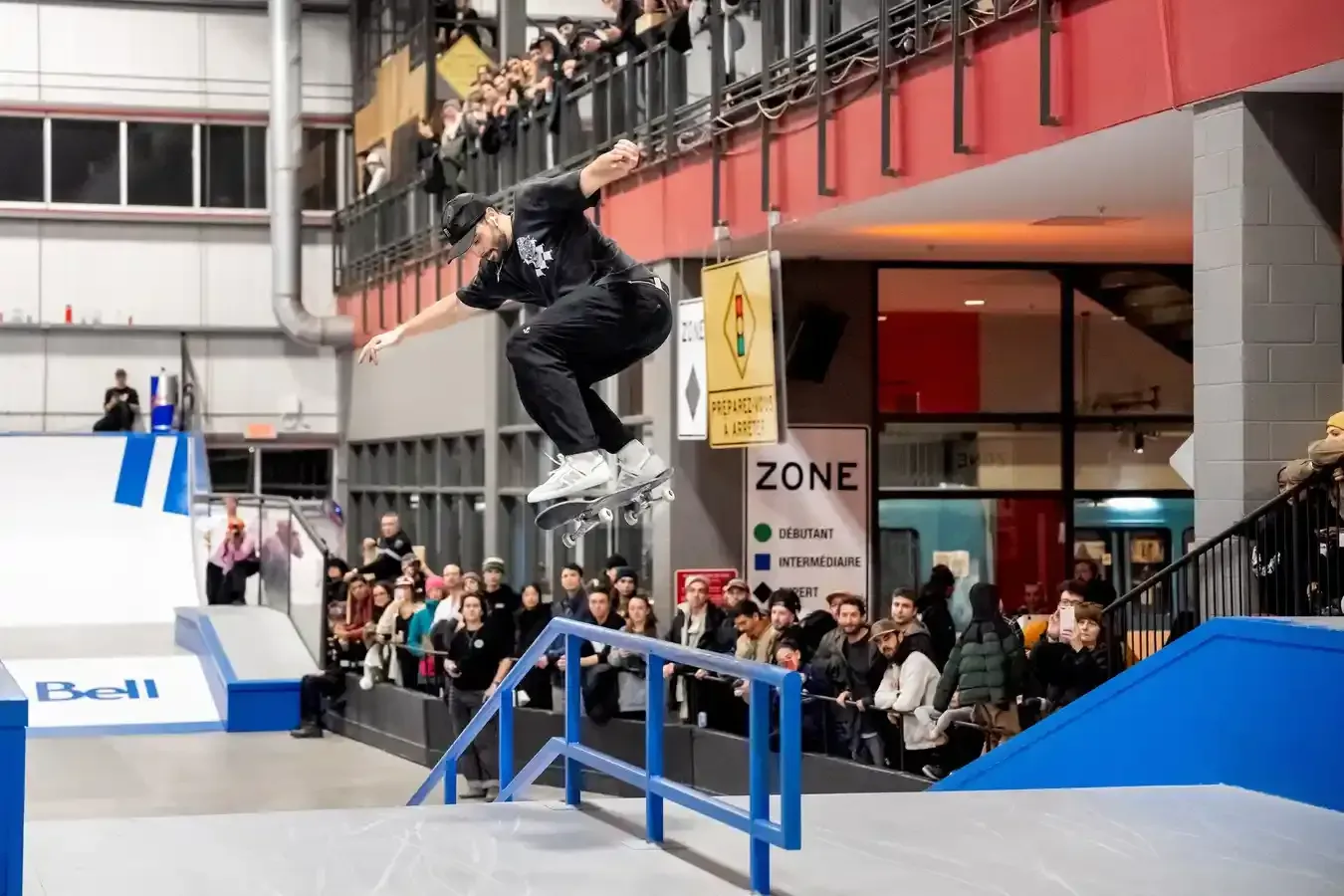
Photo by Dan Mathieu
Basics in Skateboarding
- Adopt a comprehensive approach to develop skateboarders, enhancing their technical, tactical, physical, mental, and life skills. This holistic development ensures skaters can translate practice learnings into competitive scenarios.
- Tailor training programs to elevate performance capacity, focusing on the 5 S’s (Stamina, Strength, Speed, Skills, and Suppleness), which are aligned with each skateboarder's stage in the adolescent growth process. The timing of training focus may vary based on whether skaters are early, average, or late maturers.
- Implement single or double periodization plans for effective management of the annual skateboarding schedule.
- Prioritize flexibility training due to rapid growth in bones, tendons, ligaments, and muscles.
- Address sensitive periods for accelerated adaptation to strength training:
- For boys, this begins 12 to 18 months after Peak Height Velocity (PHV).
- For girls, it starts with either menarche or the onset of Peak Weight Velocity (PWV).
- Formal weight training under qualified supervision is recommended for strength development.
- Develop aerobic capacity before PHV and aerobic power after PHV.
- Enhance speed through activities focusing on agility, quickness, and changing direction, particularly during warm-ups.
- Ensure alignment with the SkateboarderDevelopment Matrix for skill requirements:
- refine fundamental skateboarding skills & consolidate basic tricks and tactics, and introduce advanced skills and tactics.
- Employ varied training methods to assess technical, tactical, physical, and mental competencies, aiding good decision-making during competition.
- Include competitive scenarios through practice competitions, games, and drills.
- Train skaters in consistent competitive situations with drills, challenges, and games.
- Develop mental skills for peak performance under pressure.
- Utilize competition primarily for strategic and tactical development, keeping the focus on learning and development over outcomes (wins and losses).
- Adjust the balance to 60% training (including pre-season) and 40% competition (including competition-specific training).
- Excessive competition can impede skill development, while insufficient competition may limit the practical application of techniques and decision-making skills.
- Prepare skaters for building momentum throughout the year to induce peak performance at key competitions of importance throughout the year.
Video caption
Best use of Skateboard Time
Learning Tactics
15.4%
Life Skills
11.5%
Competition Tactics
15.4%
Mental Skills
11.5%
Technical Skills
26.9%
Physical Capacity
19.2%
Physical Competencies
Low
Medium
High
Endurance
Speed - Hand/Foot
Speed - Whole Body
Speed - Endurance
Relative Strength
Strength - Endurance
Explosive Power
Flexibility
Skill Development
Mental Skills
Since there is so much going on in the lives of young adolescents at the train to train stage, mental health and mental performance plays a crucial role in the development and retention of skaters in the sport.
The 3 fundamental competencies continue to be developed.
1
Motivation
is the 'force' that initiates, guides, and maintains behavior
2
Confidence
is the mental state of self-belief or certainty in one's ability to be successful
3
Resilience
is the mental state of adapting to stressors to overcome challenges & setbacks
6 more competencies involved in decision making, self regulation and well being are introduced for a total of 12. They are listed here. Specific activities are to be developed by the people supporting each skater as their needs and capacities are identified.
Decision Making
Is the ability and speed to make good decisions based on how well a skater can acquire, process and use available information
Memory
Focus on consolidating skills through the practice of multi-skill lines, encouraging the combination of various skills in a single run to enhance fluidity and adaptability.
Attention control
Is a skater's ability to deliberately direct their attention toward something (like a person, object, or cue) to perform a skill or task.
Mindfulness
Is a skater’s ability to maintain a moment-by-moment awareness of their thoughts, feelings, and sensations, often described as being “fully present”
Self Regulation
Is the capacity to understand and manage your own thoughts, feelings and actions in the pursuit of personal goals, values and ideals.
WellBeing
Is feeling fulfilled, having a positive view of oneself, and experiencing a sense of purpose
Event Examples
Duis ultrices porta ipsum in sollicitudin. Nullam ac urna quis augue efficitur lobortis egestas quis dolor. Proin non consequat tellus. Nullam et volutpat ipsum. Fusce et fermentum lorem.
U-12 Slurpee Canada Open
Sanctioned Canada Pro/Am
PHX Am/Damn AM
World Skate 3 + 5 Star Sanctioned Events
Slurpee Canada Skateboard Open
Tampa Am/Exposure
World Cup Skateboarding
Roll to the next stage
6
Next Stage